
Omer Bartov
Omer Bartov
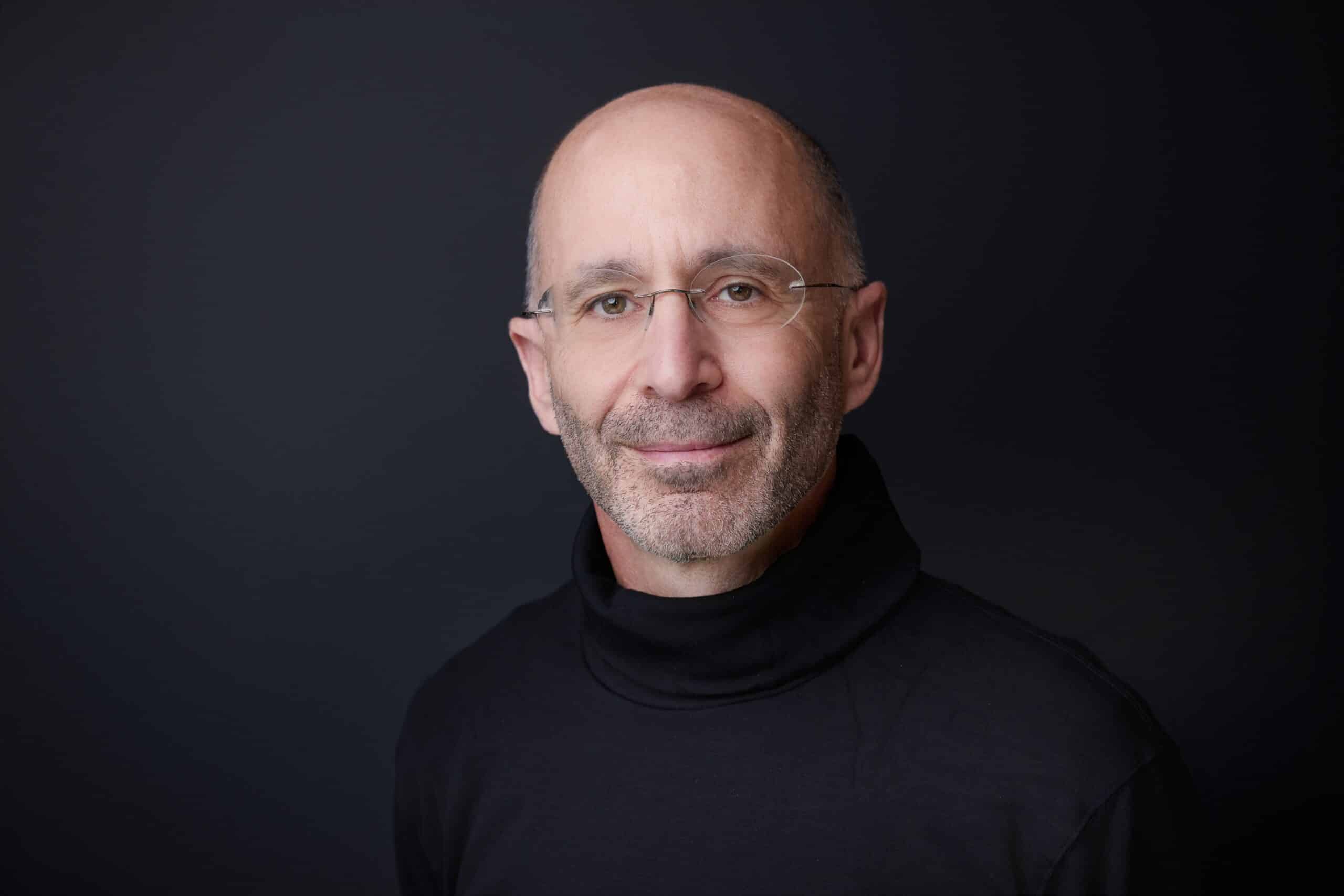
Omer Bartov is an Israeli-American scholar and Dean’s Professor of Holocaust and Genocide Studies at Brown University. Bartov served in the IDF in the 1970s and studied at Tel Aviv University and Oxford.
Bartov has written widely on war crimes, interethnic relations, and genocide. Recent books, published in multiple languages, include Anatomy of a Genocide: The Life and Death of a Town Called Buczacz (2018), which won the National Jewish Book Award; Genocide, the Holocaust and Israel-Palestine: First-Person History in Times of Crisis (2023), named Choice 2024 Outstanding Academic Title; and Israel: What Went Wrong? (2026). Bartov’s essays and commentaries have been widely featured in national and international magazines and media outlets, including the New York Times, The Guardian, CNN, and the BBC.
Bartov has given dozens of public lectures at universities and public venues in the United States, Europe, Israel, and Asia, often to large audiences. Most recently he has spoken at Oxford University, the Humboldt University in Berlin, the Collège de France in Paris, and the University of Rome, The International Institute for Peace in Vienne, Austria, the Federal University of Rio de Janeiro, Brazil, the University of Buenos Aires, Argentina, as well as at multiple universities in the United States, ranging from Harvard, Columbia, Princeton, Johns Hopkins and Chicago to Arizona State University in Phoenix, University of New Mexico, Whitman College, Maryland University, University of Virginia, and Rutgers, inter al.
|
Hardcover
|
A leading Israeli American scholar of the Holocaust explores and explains his native country's intensifying turn toward violence and exclusion.
The distinguished historian Omer Bartov was born on a kibbutz, grew up in Tel Aviv, and served in the Israel Defense Forces during the Yom Kippur War. He went on to become a leading scholar of the...Read More
|
|
Paperback
|
A 2024 Choice Outstanding Academic Title
This book discusses some of the most urgent current debates over the study, commemoration, and politicization of the Holocaust through key critical perspectives. Omer Bartov adeptly assesses the tensions between Holocaust and genocide studies, which have repeatedly both enriched and clashed with ea...Read More
|

Israel: What Went Wrong?
Sketches the tragic transformation of Zionism, a movement that sought to emancipate European Jewry from oppression, into a state ideology of ethno-nationalism. Tracing the roots of the violent events currently unfolding in Israel and the occupied territories, the lecture considers the origins of Zionism, the intertwining of Israel’s independence with Palestinian displacement, the politics of the Holocaust, controversies over the term “genocide,” and the uncertain future.
Obliterating Gaza: Origins, Implementation and Consequences
Discusses more closely my understanding of the genocide in Gaza, its immediate and historical roots, and possible future scenarios. Examines definitions of war crimes, crimes again humanity and genocide, the roles of the International Court of Justice (ICJ) and the International Criminal Court (ICC), and definitions and debates over apartheid and antisemitism. Examines the two scenarios of Israel becoming a full-blown apartheid state or of transforming the political paradigm and creating an Israeli-Palestinian confederation.
Israel: A State of Denial
The lecture asks how is it possible that a state founded in the immediate aftermath of the Holocaust, an event that gave legitimacy to a national home for the Jews, stands credibly accused of perpetrating large-scale war crimes? How do we come to terms with the fact that Israel’s war of destruction is being conducted with the support, laced with denial and indifference, of so many of its Jewish citizens? Why has Israel enjoyed such extraordinary impunity from its closest allies? And what are the links between Holocaust denial and the denial of the genocide in Gaza?

“Historian Omer Bartov on why he believes Israel is committing genocide in Gaza”

“On GPS: Holocaust scholar says Israel is committing genocide”

“I’m a Genocide Scholar. I Know It When I See It.”



“Omer Bartov on Gaza genocide and Israel’s history of occupation”

“Omer Bartov on Gaza: ‘It’s a Misnomer to Call It a War'”
“Israeli-American historian explains why he now believes Israel is committing genocide in Gaza”
“A Genocide Scholar on the Case Against Israel”
“What I Believe as a Historian of Genocide”

“A Holocaust Scholar Meets with Israeli Reservists”
“Is It Genocide? Omer Bartov Sparks a Furor”

“Antisemitism, Then and Now: A Guide for the Perplexed”

“‘That Is Genocide!’ Israeli-American Holocaust Historian Tells Mehdi”

“Holocaust scholar says Israel has committed genocide in Gaza”

“Legacies of Violence in Israel and Palestine — with Omer Bartov”
“I want to thank you, once again, for your presentation at UMass Amherst, on the occasion of the inaugural CBI Lecture on the Holocaust and Contemporary Social Problems. As I said to you at the reception, there was a whole semester’s worth of information that you presented and I, as well as many others, were still left wanting to hear more.”
— Alan Berkenwald, UMass Amherst
“I attended Omer Bartov’s keynote address for Genocide Awareness Week. I knew it would be a challenging and emotional time for me, and it absolutely was, although it was also encouraging. Bartov’s address very clearly covered the complexity and frailty of society, globally now, and was empathetic but firm. I am glad I attended the keynote address. I feel less powerless now, and more equipped to (potentially) have the conversations that scare me.”
— Arizona State University student
“On behalf of Johns Hopkins University, the Alexander Grass Humanities Institute, and the Hopkins at Home team, I want to extend my deepest gratitude for your participation during our discussion, Roots of Conflict, Paths to Peace. Your insights, expertise, and thoughtful dialogue contributed greatly to what was a truly meaningful and thought-provoking conversation. Discussions on the history of the Israel-Palestine conflict and potential paths to peace are complex and often deeply personal. We greatly appreciate your willingness to share your perspectives in a respectful and civil manner. Thanks to your efforts, the discussion not only provided valuable insights for our Hopkins community but also served as a model for engaging in difficult conversations with those who hold differing perspectives. Thank you again for your time, expertise, and commitment to meaningful discourse. We are honored to have had you as part of this important conversation and hope to collaborate with you again in the future.”
— Matt Schneider, Sr. Instructional Designer / Project Manager, Zanvyl Krieger School of Arts and Sciences, Johns Hopkins University
“I wanted to express my deep gratitude for all your contributions in the HAU discussion. A lot of people told me they felt they could breath and were very happy and also relieved. I think it was a precious contribution in the town, also because it was so precise and combined different perspectives. Thank you again. In solidarity and I send a lot of strength for all of your important fights.”
— Margarita Tsomou, Hebbel am Ufer
“I was just at your talk at Birkbeck. Perhaps it was confirmation bias, but the strands of history you mentioned really resonated with me.”
— David Koehne
“As I told you after your lecture today, I found your analysis (particularly its emphasis on language and narrative) fascinating.”
— Anne Griffin, Professor of Political Science and Public Policy, Emerita, The Cooper Union for the Advancement of Science and Art
“Thank you for your excellent lecture and thoughtful Q&A session last night at FGCU.”
— Susan L. Suarez, MBA, CFRE, President and CEO, Holocaust Museum & Janet G. and Harvey D. Cohen Education Center
“My husband and I just watched your conversation with Mehdi Hassan at the restaurant in Washington DC published on Zeteo. We really found it excellent, so important in these times, and were impressed with your clarity of expression and your deep knowledge of your subject. Thank you for your work, your courage, and your honest scholarship!”
— Susan Weeks and Peter Solow
“It was a huge honor to meet you and spend time with you yesterday. You are an inspiring scholar and public intellectual. Thank you for coming to Georgetown/Washington DC.”
— Nader Hashemi, Associate Professor of Middle East and Islamic Politics; Director, Alwaleed Center for Muslim-Christian Understanding, Edmund A. Walsh School of Foreign Service, Georgetown University
“I’ve been getting wonderful feedback and you and Noah modelled exactly
the kind of civil disagreement that is so beneficial for the students. We all learned a lot. I hope our paths cross again soon.”
— Susan Kahn, Ph.D., Associate Director Julis-Rabinowitz Program on Jewish and Israeli Law, Harvard Law School
“Thank you so much for your amazing talk today Dr. Bartov! Our whole board really appreciated the expertise you brought and we cannot tell you enough how grateful we are. We would love the opportunity to speak with you again in the future, and we wish you a good night!”
— Rawan Farhan, J.D. Candidate, Class of 2026, University of Oklahoma College of Law
“I just want to thank you again for last evening. I spoke to a few students today who were very happy about the event. Two of them said, ‘we need more things like this at Providence College.’ Another student said she felt that she had a much better understanding of what was happening in Israel, because you both made the topic so accessible. So thank you, again.”
— Dr. Francesca Silano, Assistant Professor of History, Department of History and Classics, Providence College
“Omer, thanks so much for your discussion tonight. We’ve had a few emails so far, one saying that your presentation was the best she’s heard at our synagogue in her > 30 year tenure. I’ll share with you that there had been a frenzy of discussion from members who expressed concern (concern being a moderated term). While your presentation was unfiltered, your evident integrity, allegiance toward Israel and depth of knowledge was clear to everyone. A few of us have been talking about getting past pro-Israel fluff and we can have that discussion now on a different level, thanks to you.”
— Alan Cole, Temple Israel of Natick
“I listened enjoyably to your talk last week with Peter. Much of what you said resonates deeply with me and the work I (and my Palestinian colleague Raja Khouri) are engaged in.”
— Jeffrey Wilkinson
Book This Speaker
x