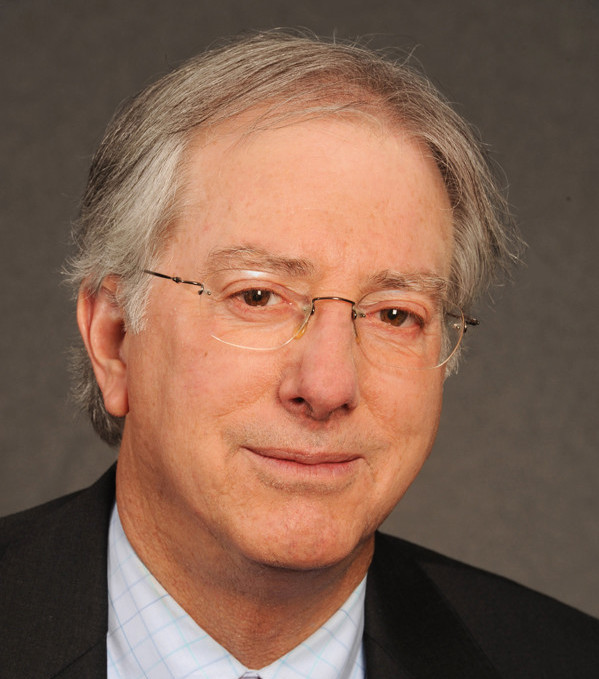


Robert Malley
Robert Malley
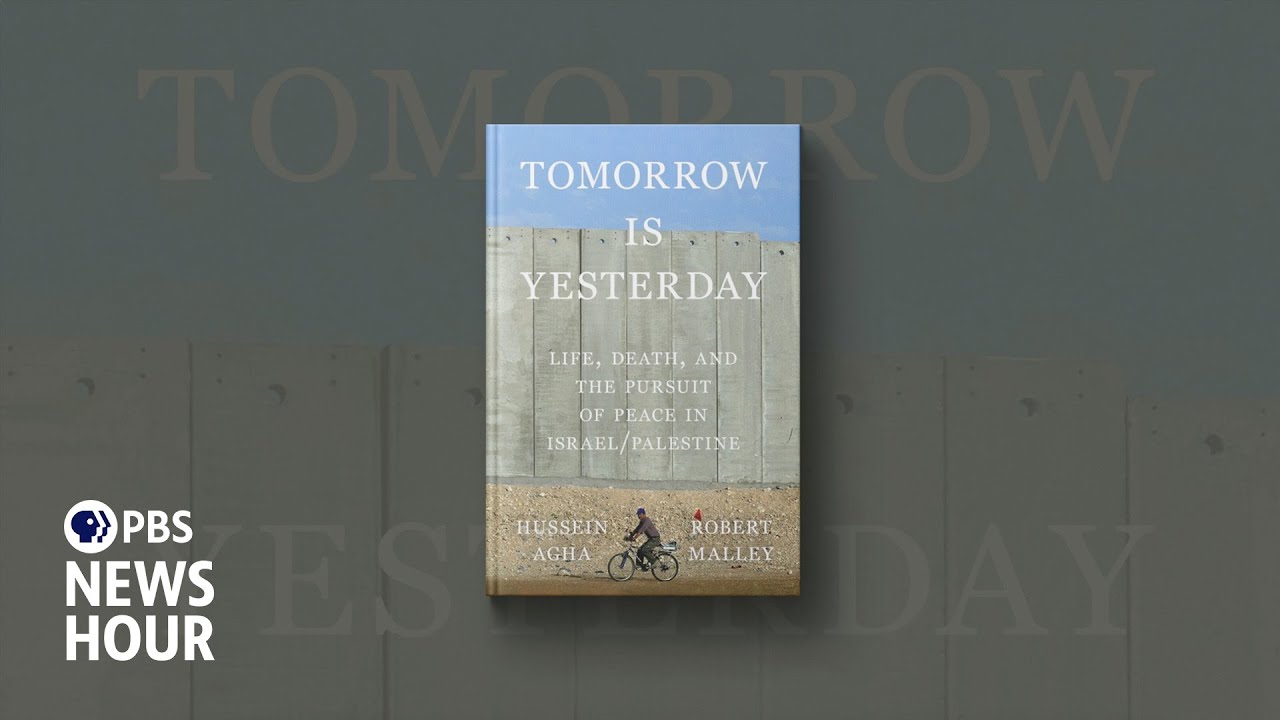
Robert Malley is a Senior Fellow and Lecturer at the Yale Jackson School of Global Affairs. He is the author, with Hussein Agha, of Tomorrow is Yesterday: Life, Death, and the Pursuit of Peace in Israel/Palestine.
He has served as Special Envoy for Iran under President Joe Biden; White House Coordinator for the Middle East, North Africa and Gulf Region under President Barack Obama; and Special Assistant to President Clinton for Arab-Israeli Affairs and Director for Near East and South Asian Affairs under President Bill Clinton. He was also President and CEO of the International Crisis Group.
Robert Malley served as a law clerk to Justice Byron R. White of the United States Supreme Court in 1991-1992. He is a graduate of Yale University, Harvard Law School and Oxford University, England, where he was a Rhodes Scholar. He is the author of The Call from Algeria: Third Worldism, Revolution and the Turn to Islam, and of articles published in the New York Review of Books, Foreign Affairs, the New York Times, the Washington Post, Le Monde, and several other publications.
|
Trade Paperback
|
A Best Book of 2025
The New Yorker • Foreign Affairs • NPR • Foreign Policy • Responsible Statecraft
In Tomorrow Is Yesterday, Hussein Agha and Robert Malley offer an up-close and bracing perspective on how the hopes of the p...Read More
|
|
Hardcover
|
A Best Book of 2025
The New Yorker • Foreign Affairs• NPR
Two insiders explain why the Israeli–Palestinian peace process failed, and anticipate what lies ahead.
On October 7, 2023, Hamas fighters killed more than eleven hundred Israelis and took more than two hundred hostages, prompting an Israeli resp...Read More
|

Tomorrow is Yesterday: How Peace Was Lost—and What Might Still Be Saved
With insights from years at the negotiating table, this talk follows the rise and collapse of the Oslo peace process, culminating in the horrors of October 7 and the devastating war that followed. It lays bare why America’s approach repeatedly failed, whether two states can still be salvaged, and what new political realities are emerging. Audiences come away with a stark, compelling map of the futures that remain open—and the ones that are already left behind.
The Washington Effect: How U.S. Policy Shapes—and Misshapes—the Israeli-Palestinian Conflict
Drawing on decades of American diplomacy, this talk reveals how U.S. decisions have at times have opened doors, more often closed them, and almost always reinforced the very dynamics Washington hoped to change. It examines where American leverage still matters, where it has evaporated, and how today’s choices could redefine the conflict’s trajectory. Audiences leave with a clear-eyed understanding of what the U.S. can realistically achieve, what it must finally rethink.
America vs. Iran: The Rivalry That Won’t Go Away
Few relationships are more explosive than the one between Washington and Tehran. This talk unpacks this turbulent, often misunderstood relationship, from nuclear diplomacy to proxy confrontations, and the domestic pressures shaping each side. It explains why past approaches have stumbled, what both countries really want, and where the next flashpoints are likely to emerge. This talk unpacks the cycles of pressure, diplomacy, and shadow conflict that keep pulling the two countries back to the brink of confrontation. It gives audiences a sharp, accessible guide to what Iran may actually want, what the U.S. can realistically achieve, and where this rivalry is headed next.
 ▶
▶
 ▶
▶
 ▶
▶
 ▶
▶
 ▶
▶
 ▶
▶


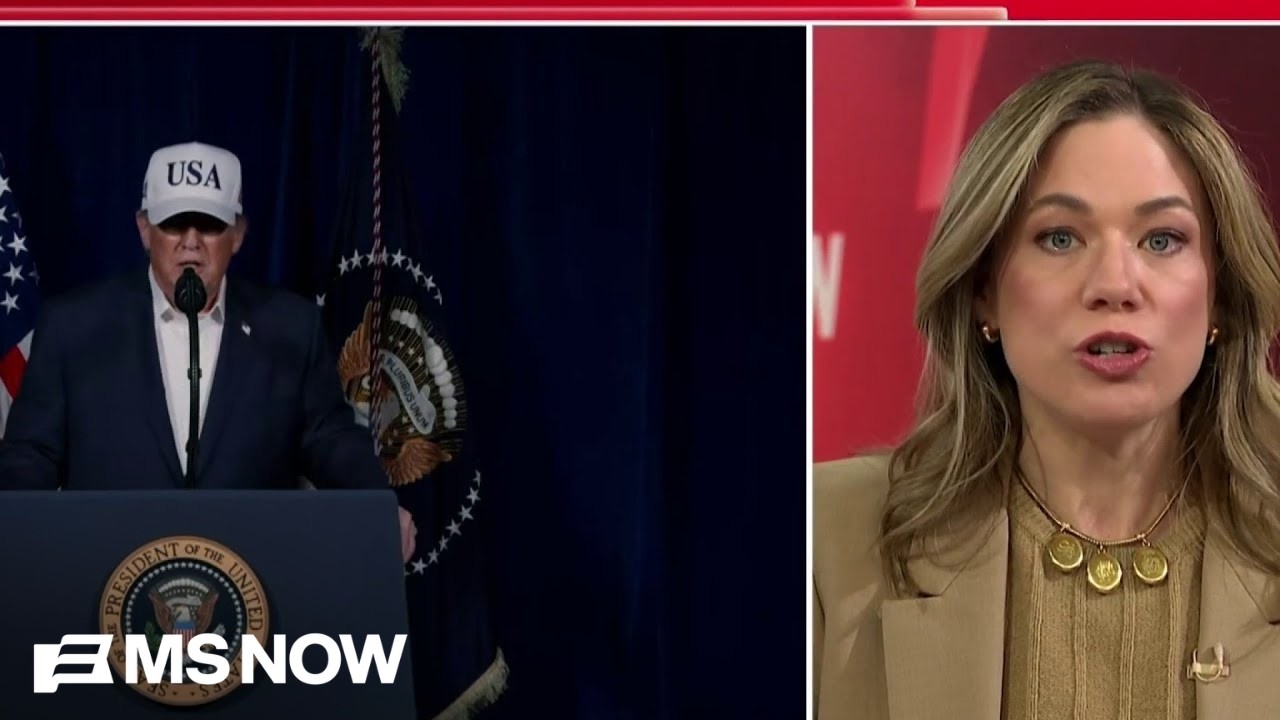
Robert Malley on CNN’s Fareed Zakaria GPS

“What’s next after Iran attack? A former negotiator weighs in.”
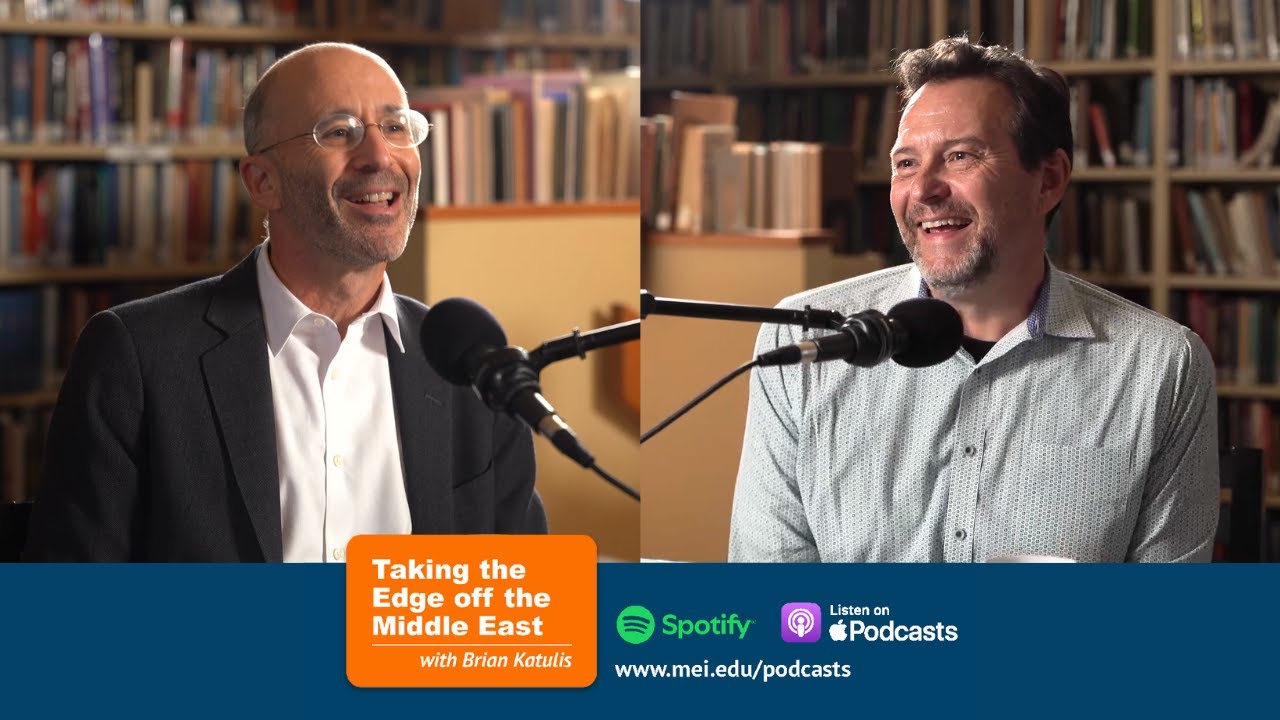
The Rest Is Politics: Leading: “How Close Are We To War With Iran? (Robert Malley)”
“Can the Israel-Hamas Deal Hold?”

“America’s Two-State Delusion”
“Two Middle East Negotiators Assess Trump’s Israel-Hamas Deal”

“Slate‘s Political Gabfest podcast: ‘Trump Ends the Gaza War'”


“Peace for Now: the long history of conflict between Israel and Palestine”


“Lessons from the Peace Process: Adam Shatz and Robert Malley”
“‘Peacemaker’ and ‘Tomorrow Is Yesterday’ are personal histories of diplomacy”

“Pod Save the World podcast: ‘Has Trump Ended 7 Wars? (No)'”
“‘Tomorrow is Yesterday’ is a book on why the Israeli–Palestinian peace process failed”

“How the ‘Dangerous Gimmick’ of the Two-State Solution Ended in Disaster”
“On GPS: Is there any hope for a two-state solution?”
Praise for Tomorrow Is Yesterday
“A coruscating book . . . that surveys the folly and missed chances of Israeli-Palestinian relations”
— David Remnick, The New Yorker
“In Tomorrow Is Yesterday [Agha and Malley] argue the peace process was doomed from the start—not by tactical missteps or bad faith, though these existed in abundance, but because it fundamentally misunderstood the conflict itself. . . . Malley and Agha’s account is clear-eyed and unsparing, rejecting the very conventions that upheld the imbalance at the heart of the process. It reads like the work of people who have burned their bridges—and it fits the gravity of the moment.”
—Noam Sheizaf, The Guardian
“[A] probing book on the failure of [the peace process] . . . grim and unflinching”
— Adam Shatz, The London Review of Books
“One of the single best books I’ve read on the Israeli-Palestinian conflict is Camp David negotiator [Rob Malley’s] Tomorrow is Yesterday, co-authored with Hussein Agha. If you’re looking for a primer on how we got to where we are today, this really is a must-read.”
— Shadi Hamid, Washington Post columnist
“A fantastic new book . . . a very up-close and personal history of how . . . negotiations played out and why they have failed over and over”
— Ezra Klein, The Ezra Klein Show, New York Times
“Timely and elegantly written . . . Agha and Malley’s argument is straightforward and persuasive . . . [The authors] demonstrate an admirable grasp of and sensitivity to the political mindsets, historical narratives, and existential fears of all sides—a remarkable feat for individuals so closely tied to the negotiating parties . . . Although it is not the first major work to challenge the Oslo orthodoxy or the church of two states, Tomorrow is Yesterday is certainly one of the most compelling.”
— Khaled Elgindy, Foreign Policy
“[Agha and Malley] present a coruscating account of three decades of attempts by the international community to persuade Israel and Palestinians to reach a territorial accommodation . . . The two men are well placed to offer a forensic dissection of the diplomacy since the 1993 Oslo accords put a two-state settlement front and centre of peacemaking. . . They do not pull their punches . . . The authors are unsparing in their criticism of the failure of successive US administrations to match a rhetorical commitment to a two-state solution with a willingness to apply the necessary pressure on Israel . . . This case is made in crisp prose and with the insight and illuminating anecdotes of insiders.”
— Philip Stephens, Financial Times
“A blistering, magisterial work of political and psychological insight that questions the viability of a two-state solution. Its most important message zeroes directly in on what most people avoid at all costs when discussing the Israeli-Palestinian conflict: The fact that the Israeli-Palestinian conflict is at heart a narrative clash.”
— Nora Berman, Forward
“Elegiac and confessional . . . Agha, a longtime adviser to Palestinian leaders, and Malley, an adviser to several U.S. presidents on Middle Eastern issues, write ruefully about what they now see as years of misguided policy . . . they argue in painful detail that the peacemakers may be behind where they started and are now paying the steep costs of this delusional policy in the accumulation of ruined lives and dashed dreams.”
— Lisa Anderson, Foreign Affairs
“Beautifully written . . . [Agha and Malley are] two people who have genuinely distinct perspectives on the Israeli-Palestinian conflict, and who have been in the room . . . A great book.”
— Chris Hayes (from The Ezra Klein Show)
“[Agha and Malley] put their finger on the essence of the problem . . . Tomorrow Is Yesterday deserves widespread attention and praise. That includes appreciation for the writing itself, which sometimes sings.”
— David B. Green, The American Prospect
“Tomorrow Is Yesterday performs the vital service of encompassing competing narratives, cutting through lies, and telling the full story of how and why efforts to achieve a two-state solution repeatedly failed. This is an honest, eloquent, courageous, and deeply personal blend of history and memoir written by two people who have been at the center of the politics of Israel–Palestine for decades, and still insist upon a future that must be better than the excruciatingly painful present.”
— Ben Rhodes, former deputy national security advisor and author of After the Fall: The Rise of Authoritarianism in the World We’ve Made
“The Middle East is the birthplace of the most influential religious traditions, and its inability to find peace constantly reignites the bitter resentments that plague our world. With their powerful narrative and elegant prose, the authors explain very convincingly why neither the local protagonists nor the foreign mediators have been able to put an end to the ordeal—and why tomorrow doesn’t look more promising than yesterday.”
— Amin Maalouf, perpetual secretary of the Académie Française and author of Origins and The Crusades Through Arab Eyes
“Fascinating and essential reading for anyone interested in the Israel–Palestine conflict and peace process, this bleak yet bracing, vivid, and acute work, part analysis, part memoir, part history, by two veteran negotiators, one Palestinian, one American, is one of the best I’ve read on the Middle East peace process and the October 7 wars. I read it in one sitting.”
— Simon Sebag Montefiore, author of Jerusalem: The Biography
“An exceptional book in the genre, Tomorrow Is Yesterday offers a brilliant and uniquely perceptive interpretation of what may be the most resilient, intricate, and multifaceted conflict of modern times. Combining the competencies of the historian and the essayist, even the dramatist, with the perspective of the insider, the authors lead us from the prehistory of the “peace process” and its presumed highest moments to its deceptions, mis-encounters, and tragic decline into oblivion. An unorthodox interpretation of the Israel–Hamas War, brilliantly woven into the book, makes it even more urgently relevant reading. Though it can be read as an obituary for the two-state solution, this is not a nihilistic treatise. The future scenarios the authors discuss could make the future somewhat brighter than “yesterday.”
— Shlomo Ben-Ami, former foreign minister of Israel and author of Prophets Without Honor: The 2000 Camp David Summit and the End of the Two-State Solution
“This must-read book is the work of two experienced deep thinkers who are strong believers in peace. True to the character of its authors in its thoughtfulness, creativity, and constructive candor, it brings to life the pain of the Israeli–Palestinian tragedies and offers important insights into the politics and personalities of Middle Eastern peacemaking. It is highly recommended for all believers in the greater good.”
— Nabil Fahmy, former foreign minister of Egypt
Book This Speaker
x